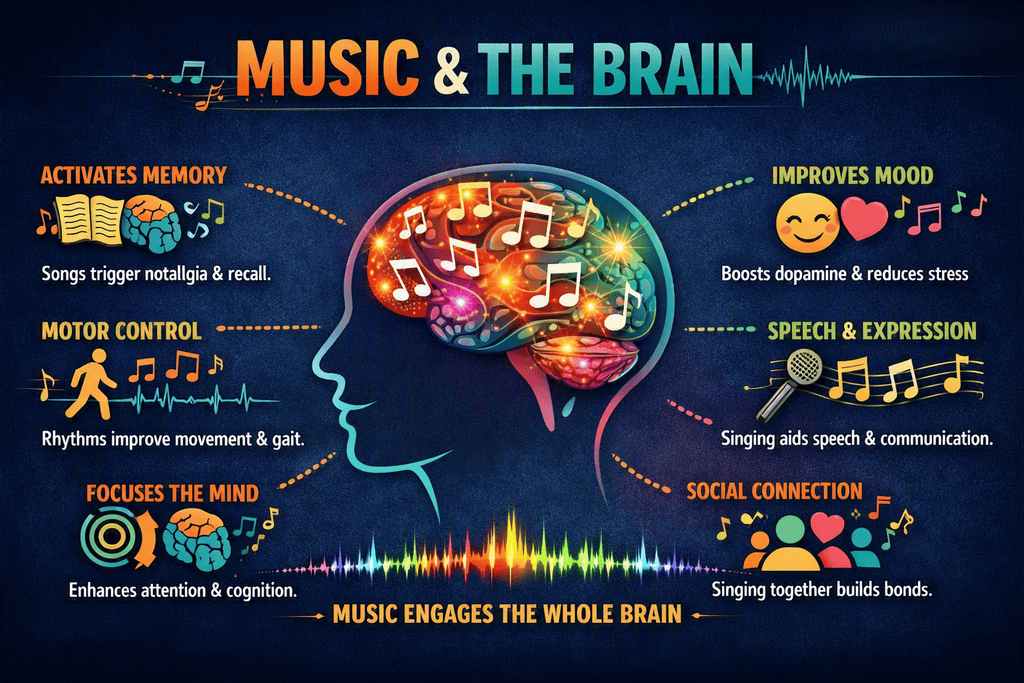
Music has a uniquely powerful impact on older adults and on people living with dementia or Parkinson’s because it activates parts of the brain that remain resilient even as other cognitive or motor functions decline. Rhythm provides an external timing cue that helps Parkinson’s patients initiate movement, reduce episodes of gait freezing—essentially giving the brain a steady beat to follow when its internal timing system falters. Melody and familiar songs tap into long‑term memory networks, which are often preserved in dementia; this is why someone who struggles with conversation may still sing every word of a beloved tune. Music also stimulates the limbic system, boosting mood, reducing anxiety, and lowering stress hormones, which can ease agitation and improve social engagement.
For older adults more broadly, singing supports breath control, vocal strength, and cognitive attention while reinforcing neural pathways through repetition and pattern recognition. Together, these mechanisms show that music isn’t just emotionally meaningful—it’s neurologically strategic, offering structure, stimulation, and connection in ways that traditional therapies often cannot.

The articles below offer valuable insight on the research and science that explain music’s powerful effects:
Music, Dopamine, and Endorphins – Harvard Health Publishing
Keep Your Brain Young with Music – Johns Hopkins Medicine
The Top 10 Ways Choral Singing Supports Health and Wellness – Chorus America
Music as Medicine for Alzheimer’s Disease and Dementia – Northwestern Medicine
Your Brain on Music: How Tunes Can Impact Your Mind – Cleveland Clinic